Since the establishment of the United Nations in 1945, the system of international assistance has undergone significant changes. Over time, a broad network of international organisations, funds, agencies, and non-governmental organisations has developed to operate in countries affected by armed conflict, poverty, and other humanitarian crises.
The development of international assistance has also highlighted several limitations within the system, particularly the politicisation of access to assistance, dependence on donor priorities, fragmentation of individual interventions, and short-term programme financing. These factors influence how assistance is designed, financed, and implemented, as well as the extent to which programmes respond to the long-term priorities of the countries in which they operate.
In practice, humanitarian and development assistance is often implemented through individual projects linked to a predefined purpose, a specific target group, and a fixed period of financing. A more effective approach recognises the expertise that already exists within the countries where these programmes are implemented. Local experts often have equivalent or higher levels of education, many years of professional experience, and detailed knowledge of local institutions, legal and economic conditions, social relations, and the practical challenges that programmes are designed to address.
Giving greater authority to foreign expertise primarily on the basis of its external origin limits the use of the existing human capital of the country and can create a model based on the principle of “I decide what is good for you.” Such an approach places local communities in a secondary position and gives greater influence to the political and economic priorities of donor countries.
Effective development assistance therefore requires a system in which the people, communities, and institutions of the countries where programmes are implemented have a central role. Their participation should extend across the design, decision-making, implementation, and evaluation of programmes. Foreign expertise has the greatest value when it complements and strengthens existing domestic capacities and supports the development of local institutions.
The purpose of a sustainable system is to create a transition from individual interventions towards interconnected mechanisms that strengthen local capacity, economic opportunities, public institutions, and the ability of countries and communities to respond to future challenges. Over time, this approach can contribute to greater self-sufficiency and reduce long-term dependence on humanitarian assistance.
At a time of growing global instability, there is a unique opportunity to become leaders in the development and implementation of solutions based on the protection of human life and human dignity. By building assistance around these values, countries and institutions can strengthen their credibility and become respected actors in promoting peace, stability, and human well-being around the world.






 Fundraising Soon
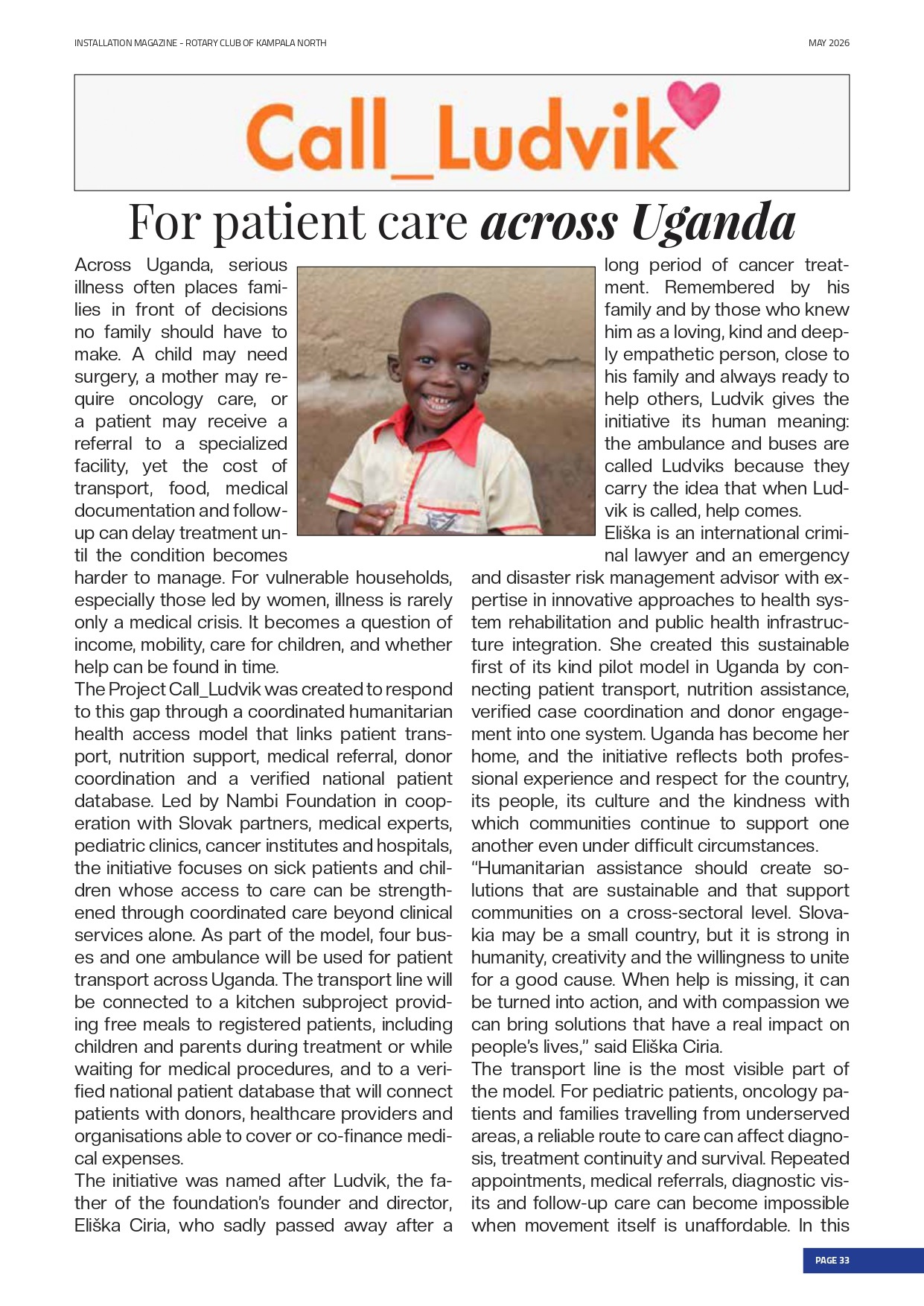 Rotary Installation Magazine
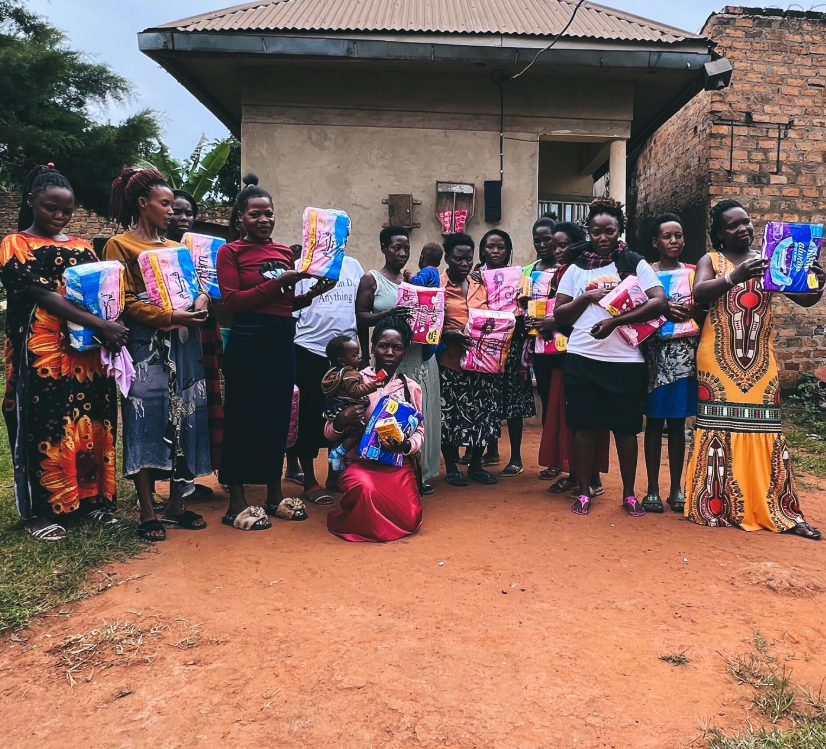 Sanitary pads for HIV-positive women in Mityana district